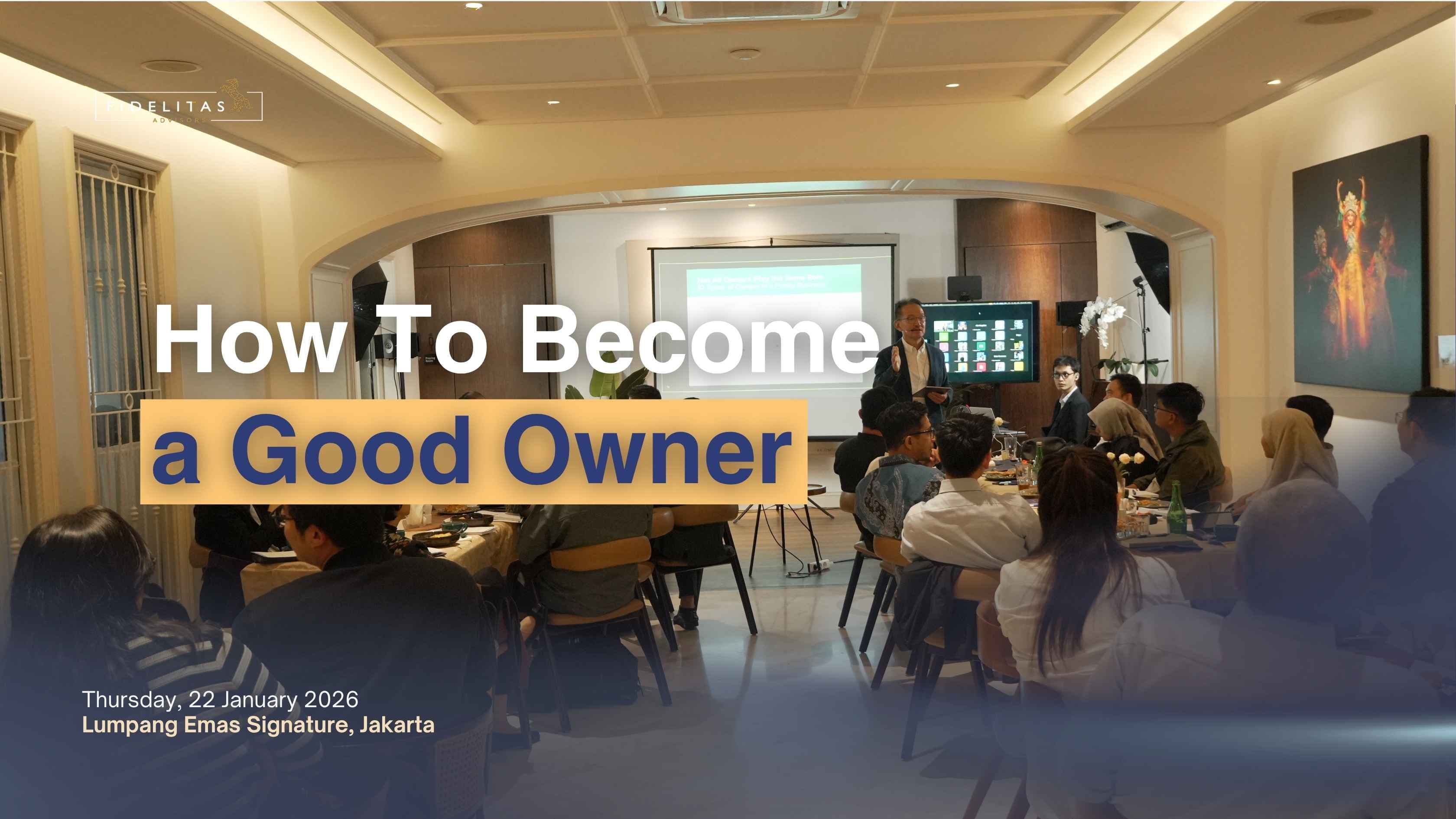
Many family-owned companies already have comprehensive governance structures in place. Boards of Commissioners have been established, meetings are held regularly, and roles have been formally documented. However, having a complete structure does not always mean that oversight is effective. In practice, important decisions are still often made without adequate scrutiny.
This issue is the main focus of “Why Do Commissioners Still Matter in Family Business,” a corporate governance session hosted by Fidelitas. Through case study analysis, presentations by two speakers, and a Q&A session, participants were invited to reconsider the role of the Board of Commissioners—not merely as a formality, but as a substantive oversight function that must be carried out effectively.
Three Case Studies: Recognizing Patterns That Often Go Unnoticed
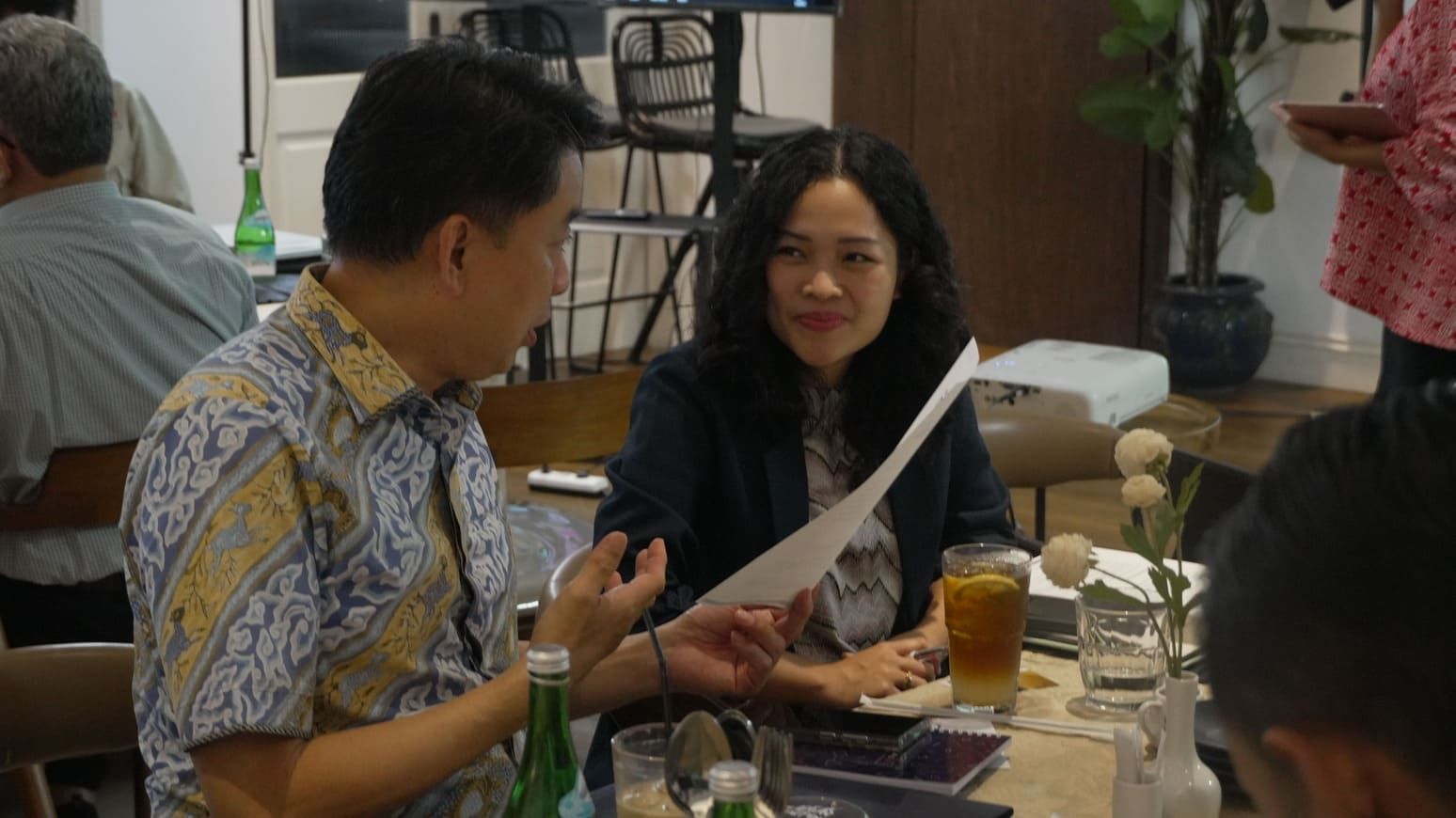
The session opened with three case studies, each representing a different challenge in oversight practices. The first case described a situation where the alignment between the Board of Commissioners and the Board of Directors was so seamless that alternative perspectives and risk assessments no longer occurred. Investment decisions moved quickly without significant challenges, and when the results fell short of expectations, it became clear that the oversight process had been replaced by the comfort of consensus.
The second case highlighted family dynamics that limited independence. When the CEO was the founder and one of the commissioners was his son, the space for openly scrutinizing decisions became limited. Discussions that should have taken place within the forum shifted outside of meetings, while formal deliberations proceeded without much scrutiny of existing decisions.
The third case highlights oversight that has become routine. A father, serving as a board member, oversees his son who manages operations. Performance remains stable, but the drive to set more challenging targets does not always emerge because the line between the parent’s role and the business role has become blurred. The business continues to operate, but its growth potential is not fully realized.
Through a group discussion approach, participants were asked to identify the key dynamics, contributing factors, and long-term risks of each situation. This approach helped participants see that oversight challenges are often structural in nature, rather than personal.
The Core Role of the Board of Commissioners: Not Operational, Not Executive
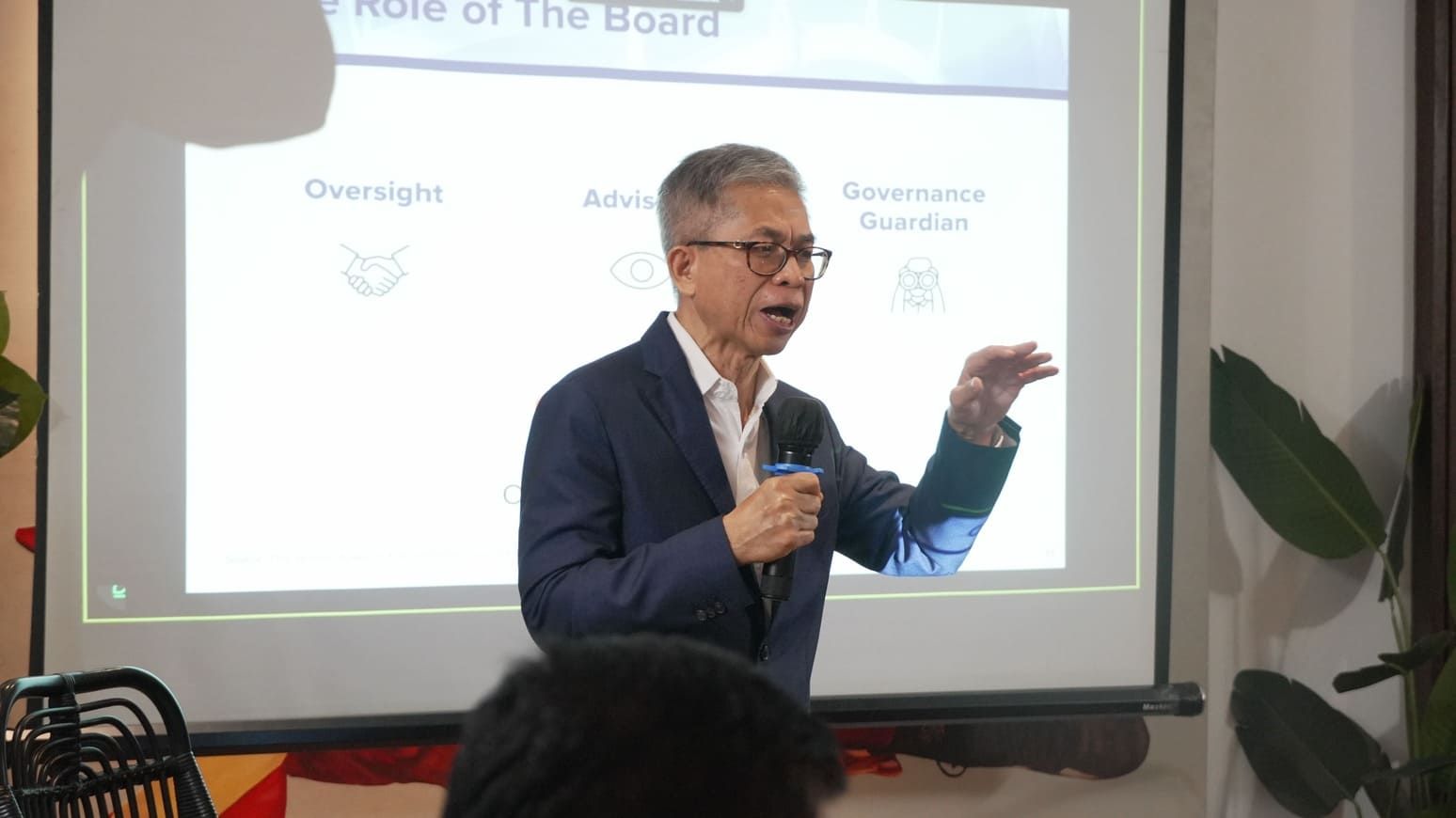
In his opening presentation, Dr. Junaedy Ganie, FCBArb, MCIArb, FIIArb, Advisor at Fidelitas and Independent Commissioner at Allianz Indonesia, emphasized that the core role of the Board of Commissioners encompasses three main functions: oversight, advisory, and governance guardian. These roles are clearly distinguished from operational and executive functions in accordance with good corporate governance. Share ownership does not automatically guarantee effective oversight.
In his presentation, he emphasized that the duties and responsibilities of commissioners include overseeing the Board of Directors, evaluating strategies and risks, ensuring compliance, and monitoring internal controls. All these functions are carried out through meetings, committees, and reports.
Qualities of an Effective Board Member
This session also highlighted four qualities that distinguish effective board members from those who merely make a formal appearance: integrity, independence, competence and courage, as well as the ability to exercise sound judgment. Conversely, warning signs to watch out for include commissioners who are passive, act merely as rubber stamps, or tend to avoid conflict.
In the context of family businesses, the composition of the Board of Commissioners is a particular concern. Two composition models were presented. The first model, with three members—one owner/chairman and two external commissioners—offers the advantage of faster decision-making but carries the risk of high dependence on specific individuals and a limited perspective. The second model, with five members—two family representatives and three external commissioners (independent and professional)—provides a stronger balance of perspectives, more objective oversight, and more robust governance to support long-term growth. The key takeaway: the balance of the composition is more important than simply selecting the right individuals.
Structure Does Not Guarantee Oversight
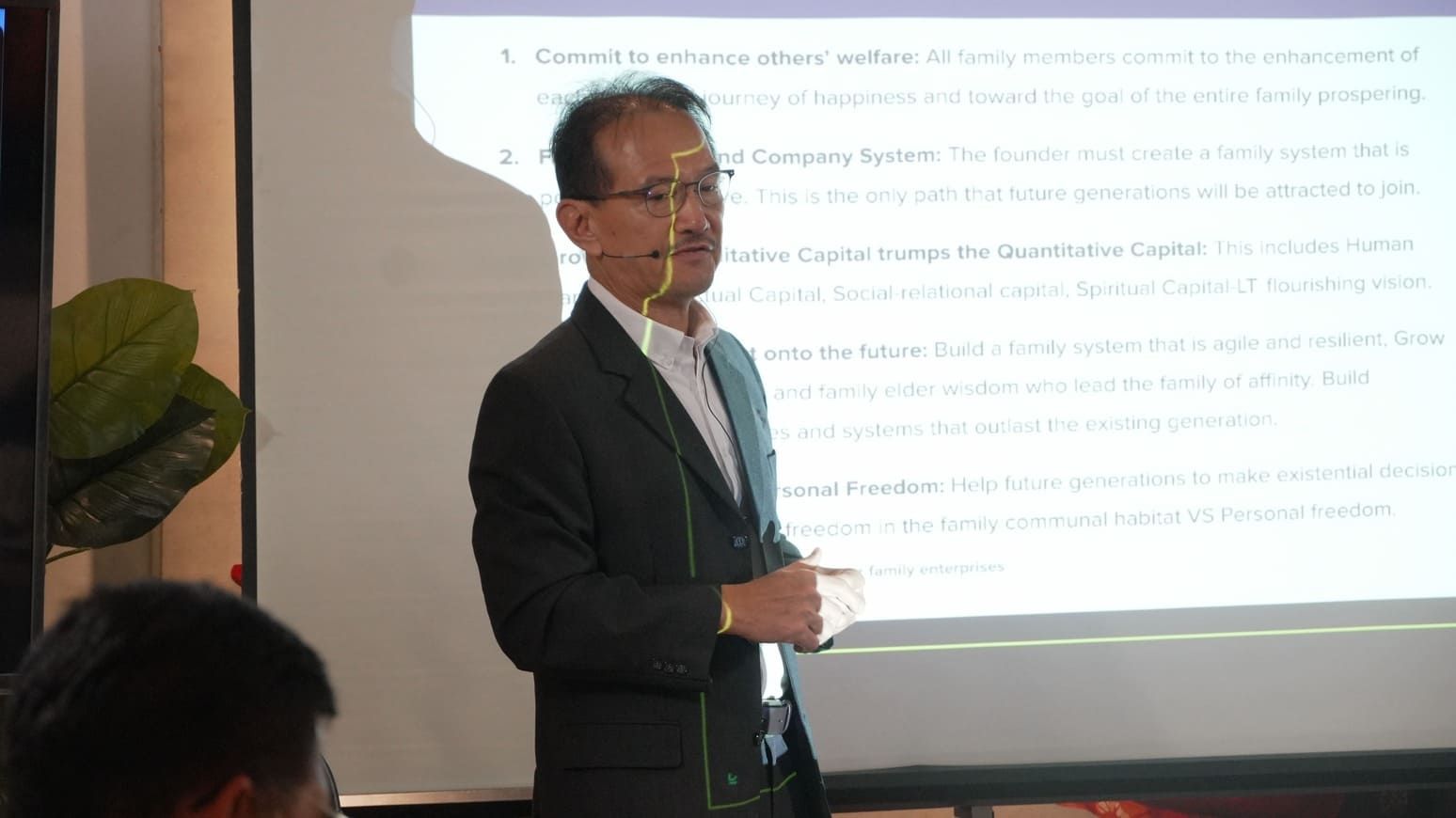
David Bingei, M.Sc-LBS, CF-ICAEW, Principal at Fidelitas and Former Board Member of a Fortune 500 Company, went on to highlight that many companies already have comprehensive governance structures, but formal completeness does not always guarantee that oversight is actively carried out. The structure is in place, roles are defined, and processes are in motion, yet critical decisions can still proceed without adequate scrutiny.
This presentation highlights several critical dynamics that frequently occur. First, ownership shapes decision-making: majority shareholders naturally exert significant influence over the direction of decisions, so decision-making tends to be concentrated in a single central figure, and alternative perspectives become less visible.
Second, independence is not always practiced. Although it is formally established, personal dynamics and relationships continue to influence how discussions unfold. Differing viewpoints become increasingly difficult to voice, and objectivity becomes situational, depending on the context and existing relationships. Third, harmony replaces challenge. High levels of trust among board members create a sense of speed and comfort in discussions. However, over time, the questions asked are merely for clarification, alternative perspectives are not fully explored, and differences of opinion become increasingly invisible. Consensus reached with ease is often mistaken for effectiveness.
Governance as a Risk Management Mechanism
This session also emphasized that governance is not merely about compliance, but rather about how risks are identified and addressed early on. In many organizations, the focus of discussions remains on performance, while risks are merely reported without being truly tested or challenged. Strategic assumptions are also often not adequately tested. The key takeaway is that governance does not eliminate risk, but it determines how early risks are identified and how seriously they are addressed.
Charter and Committee Framework: The Foundation of Living Governance
The presentation also highlighted the importance of the Board Charter as a document that defines the eight core elements of governance: roles and authorities, scope of responsibilities, structure and composition, meeting and decision-making processes, committee framework, ethics and conduct, information and reporting, and ongoing evaluation. The charter is not merely a formality but an instrument that clarifies roles, prevents overlap, and strengthens accountability. The three key committees recommended to support the effectiveness of the Board of Commissioners are the Audit Committee, the Risk Committee, and the Nominating & Compensation Committee. Each has specific functions in deepening the analysis of critical issues, strengthening diverse perspectives, and improving the quality of decisions. It is important to remember: committees support, not replace, the role of the Board of Commissioners.
Is Our Governance Really Working?
The session concluded with a series of reflective questions that encouraged participants to honestly evaluate the effectiveness of their boards and committees. Does the board constructively challenge management? Are discussions substantive and forward-looking? Is independence truly in place and having an impact? Does the absence of a commissioner make a difference? These questions are not merely procedural evaluations, but an invitation to examine whether a well-structured governance framework actually results in meaningful oversight.
Implications for Family Businesses
This event underscores that the role of commissioners remains relevant and important, yet its relevance lies not in the completeness of the structure, but in the quality of oversight that is actually carried out. Without active and substantive oversight, the governance structure risks becoming a mere formality that fails to protect the company from strategic risks.
An effective corporate governance approach helps family businesses adequately test strategic decisions before implementation, maintain the independence of oversight from the influence of family dynamics, ensure that risks are not only reported but also addressed seriously, and build sustainable accountability across generations.
Family businesses that understand that ownership is not the same as oversight—and that build oversight mechanisms that are alive in practice, not just on paper—will be better prepared to face the challenges of growth and transition in the future.