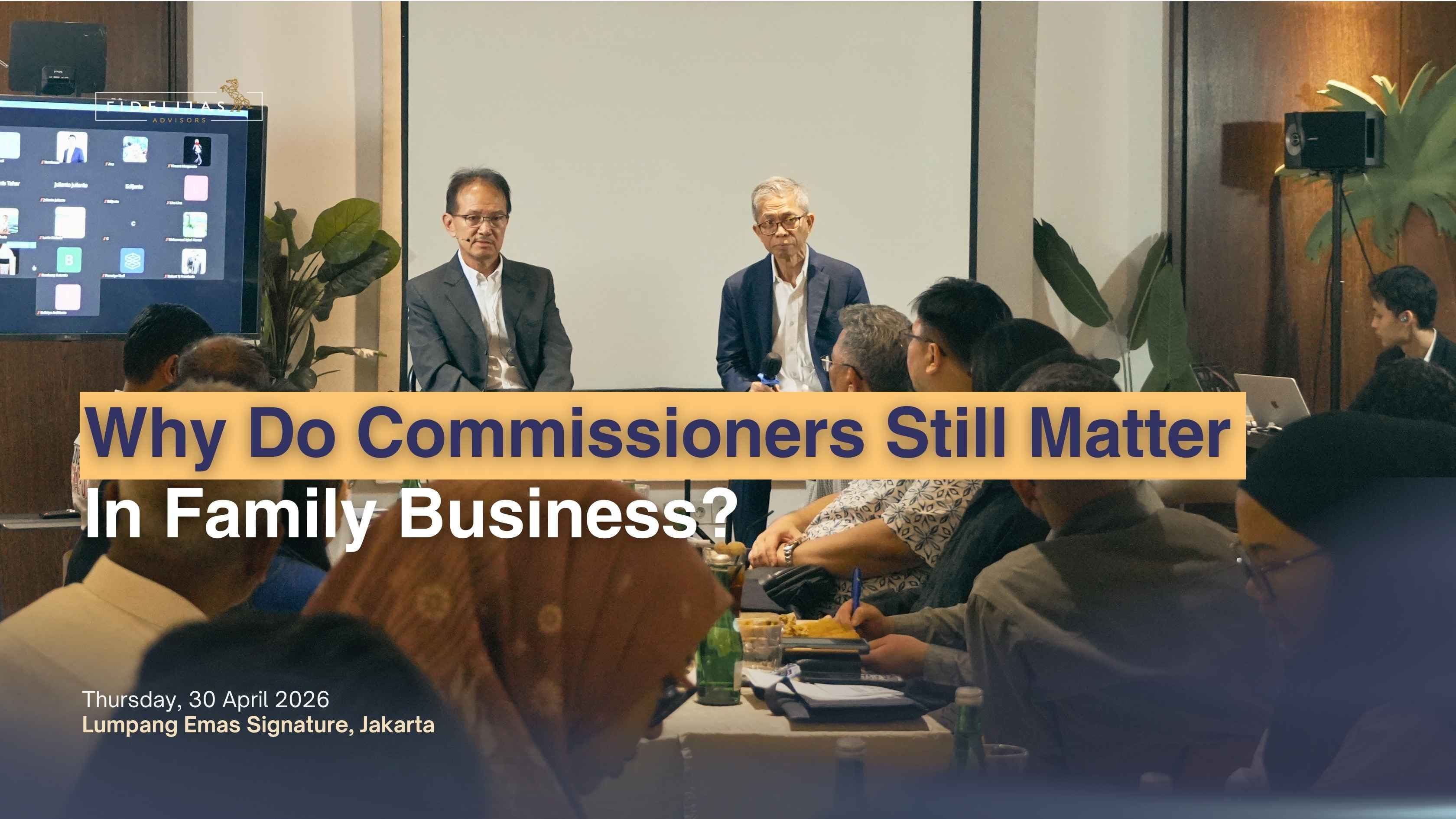
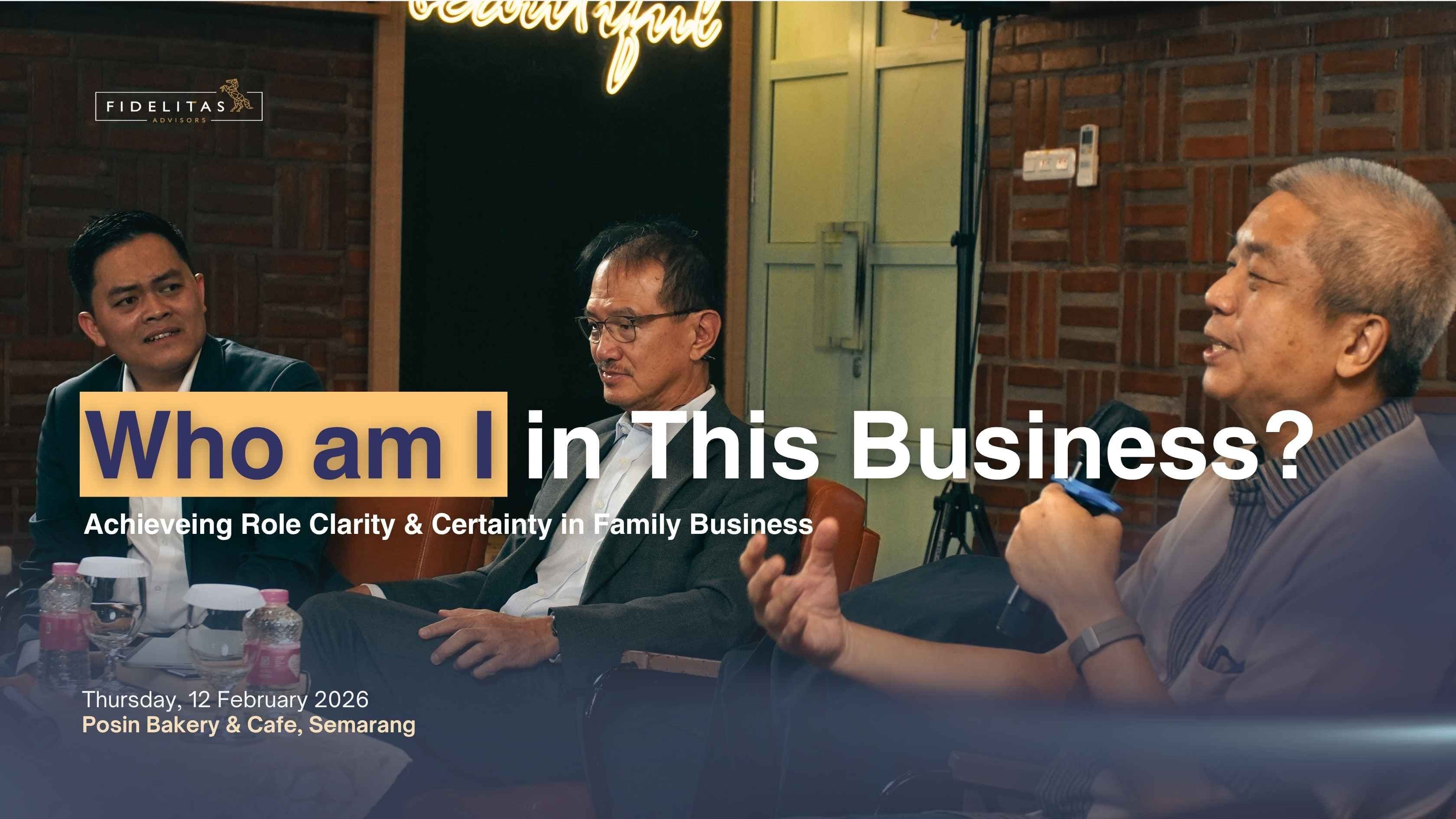
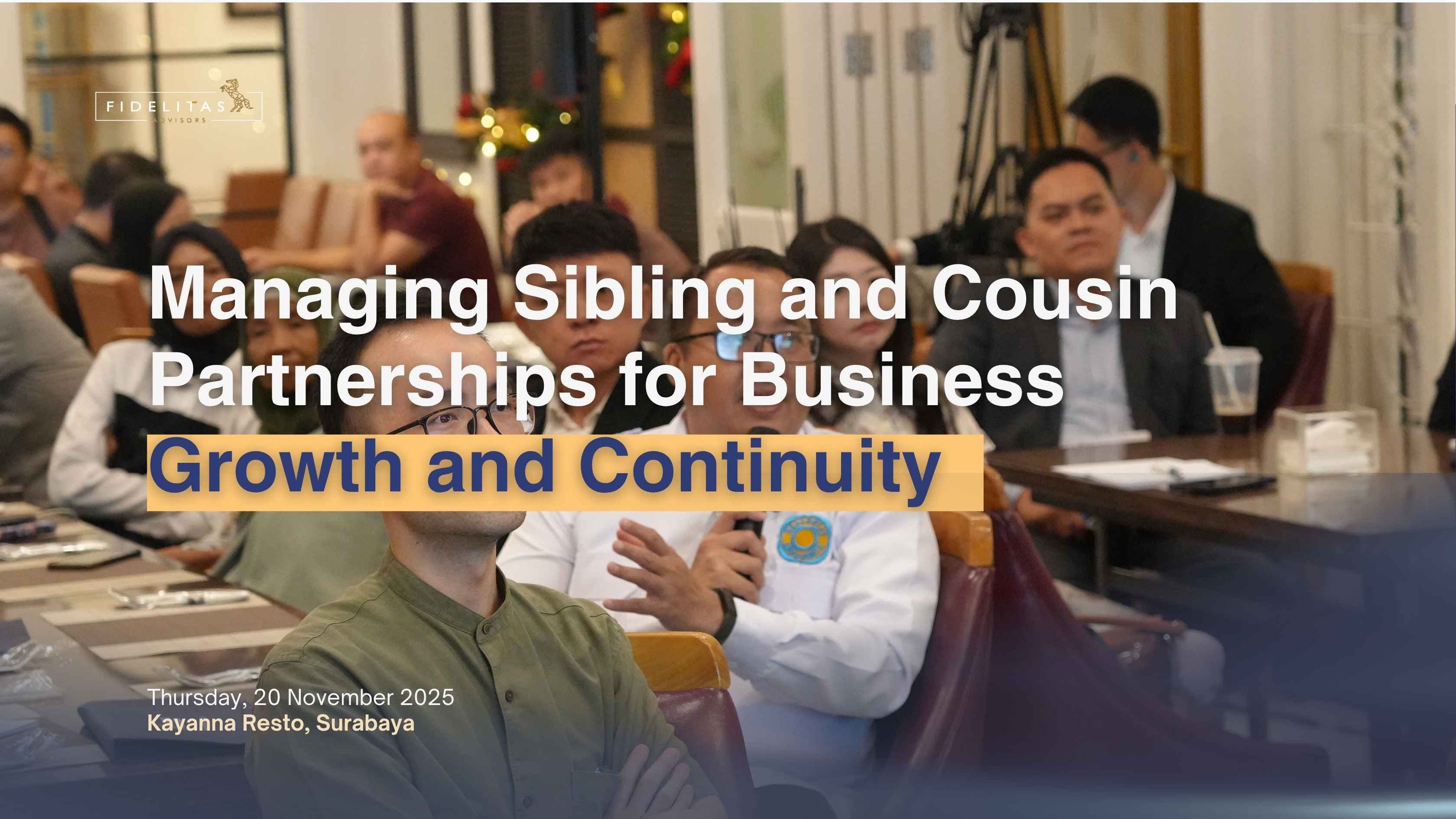
This issue is the main focus of “How to Become a Good Owner,” a Family Business session hosted by Fidelitas. Through presentations and Q&A sessions, participants are encouraged to reevaluate ownership not merely as a label, but as a strategic function that must be consciously designed and executed.
When the Owner Becomes a Source of Uncertainty

By separating the issues from specific individuals and personal relationships, this case study helped participants identify structural patterns. This approach facilitated an understanding of where role boundaries begin to blur, how this impacts the organization, and why role clarity is a crucial foundation for sound and sustainable decision-making.
Not All Owners Play the Same Role

Ownership in family businesses takes many forms. There are active founders, founders who have stepped back, active non-founder owners, passive owners, majority owners, and minority owners—whether within a purely family structure or one that includes external shareholders. Each position carries different rights, limitations, and responsibilities.
Problems arise when these differences are ignored. When families assume that all owners must be involved in the same way, contribute at the same level, and have an equal say in every decision, conflict becomes almost inevitable. According to his presentation, ownership conflicts are rarely caused by the distribution of shares alone. Conflicts more often stem from role expectations that have never been explicitly agreed upon.
Ownership Is Not a One-Size-Fits-All Concept
The presentation then highlighted that ownership cannot be treated as a single concept. Founders, sibling owners, cousin shareholders, majority, and minority owners face different contexts, risks, and limitations.
Attempts to treat all owners the same actually create new tensions. In many cases, the desire to be “fair” is interpreted as equal roles, when what is actually needed is clarity.
Some common patterns of issues include passive owners who are often expected to be as involved as active owners, active owners feeling burdened by family expectations, and the tension between the principle of equality and the need for professionalism. In this context, fairness in ownership is not about who gets an equal share, but rather who fulfills the appropriate role.
Clarity Is More Important Than Equality
One of the key messages in this session is that fairness in a family business is built through clarity, not through the standardization of roles. Different owners require different frameworks and expectations.
When roles are not defined, family businesses tend to rely on personal relationships, family hierarchies, and intuition. This approach may seem effective in the early stages, but it becomes fragile as the business grows and becomes more complex. The presentation emphasized that conflicts that arise are often not a failure of family relationships, but rather a sign of an immature governance structure.
Owners as System Stewards
During the Q&A session, it was emphasized that the owner’s role is not to replace management but to safeguard the system. An effective owner focuses on structural design, clarity of mandates, and long-term risk management.
The risks in question are not only related to financial performance but also to the legitimacy of leadership, family relationships, and intergenerational continuity. Within this framework, ownership is positioned as a strategic risk management function.
This approach helps shift the owner’s role from that of a controller to a guardian of the business’s direction and values.
Implications for Family Businesses
This event underscores that being an owner is a role that must be consciously learned and designed. Without role clarity, ownership actually has the potential to create uncertainty and friction that hinder growth.
A structured approach to ownership helps family businesses to:
- Align expectations among owners
- Reduce conflicts arising from overlapping roles
- Strengthen decision-making systems
- Ensure business sustainability across generations
Family businesses that understand the boundaries of owners’ roles and establish governance structures aligned with their ownership structure will be better prepared to navigate the dynamics of growth and transition in the future.