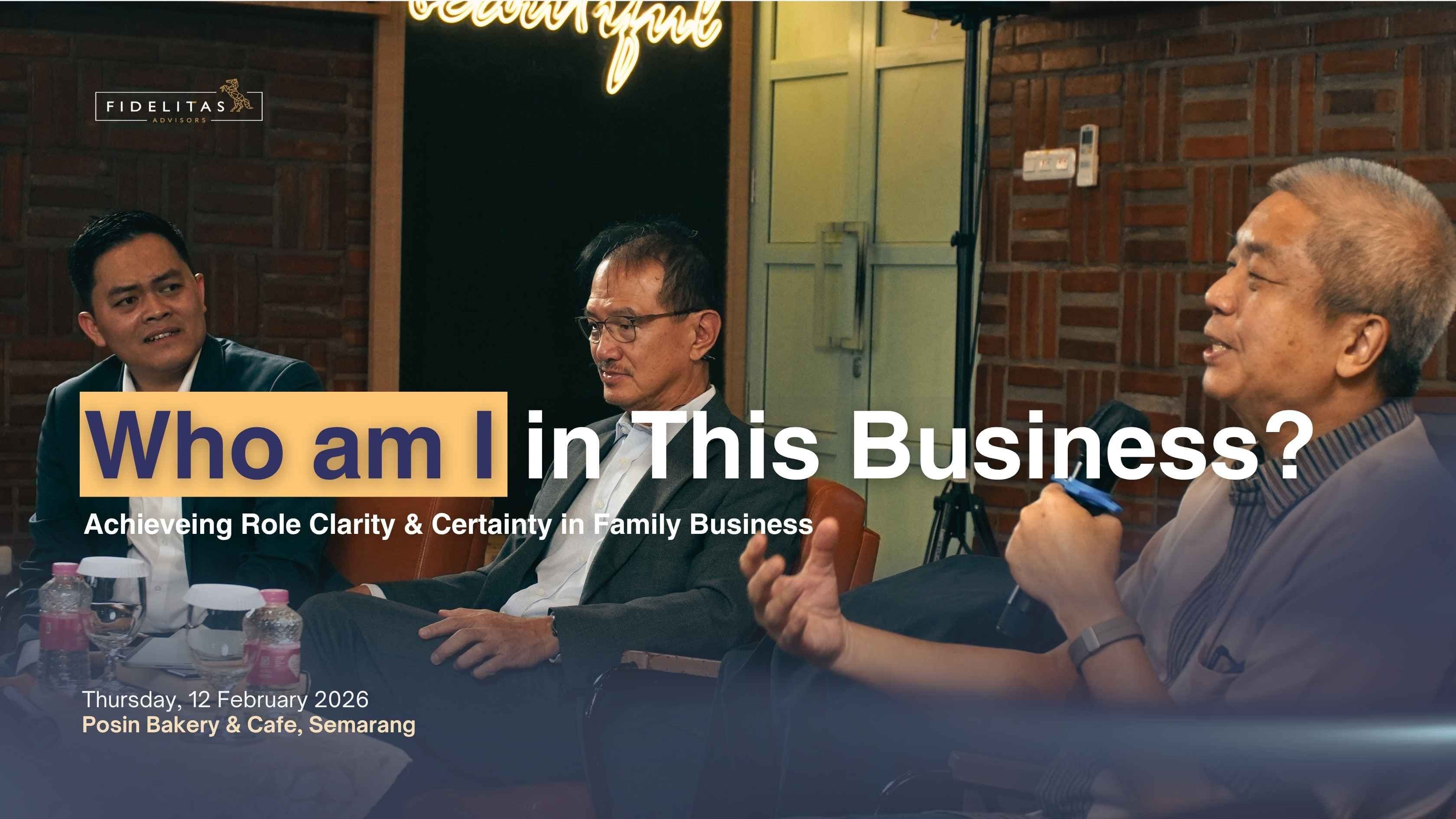
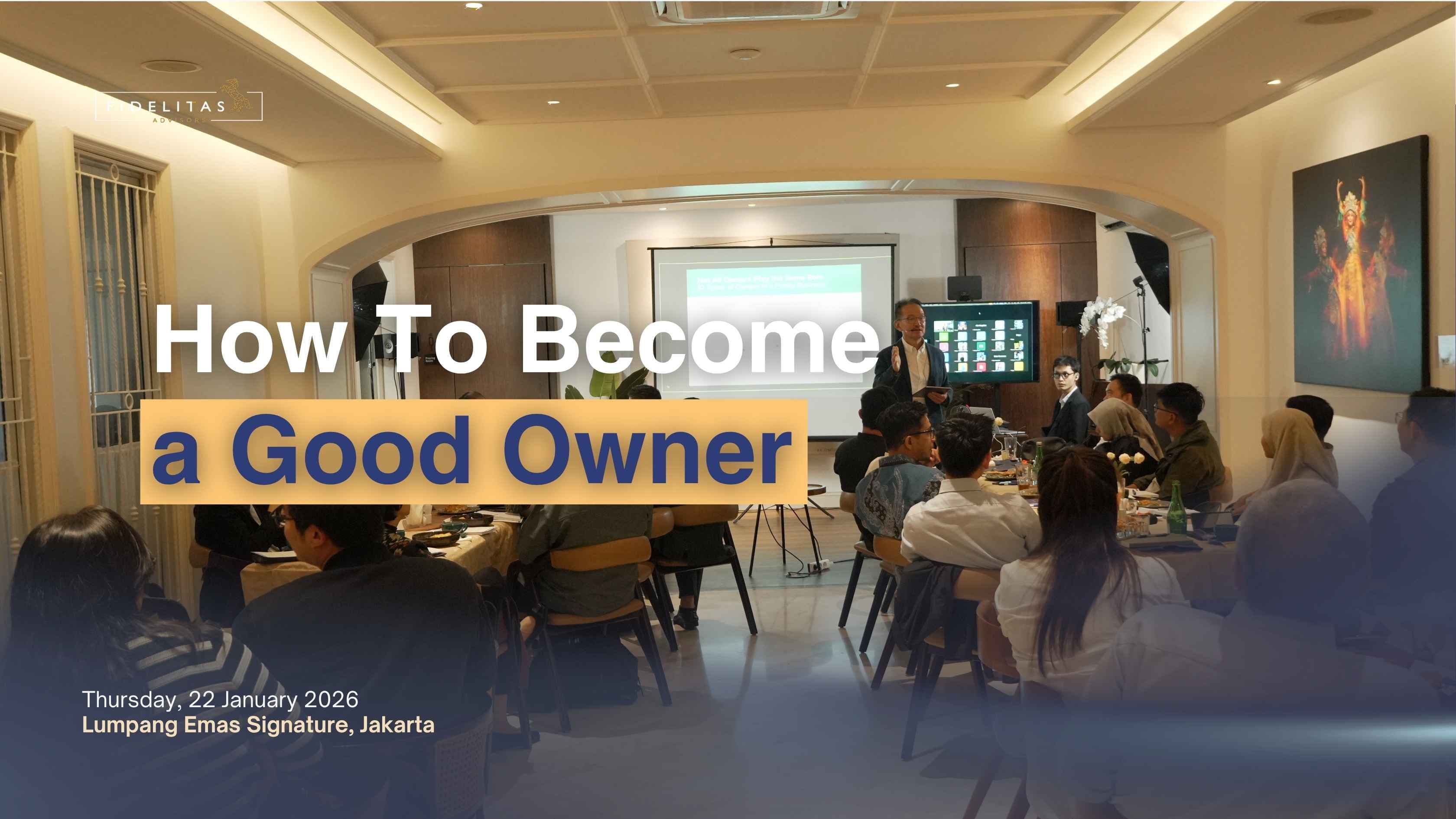
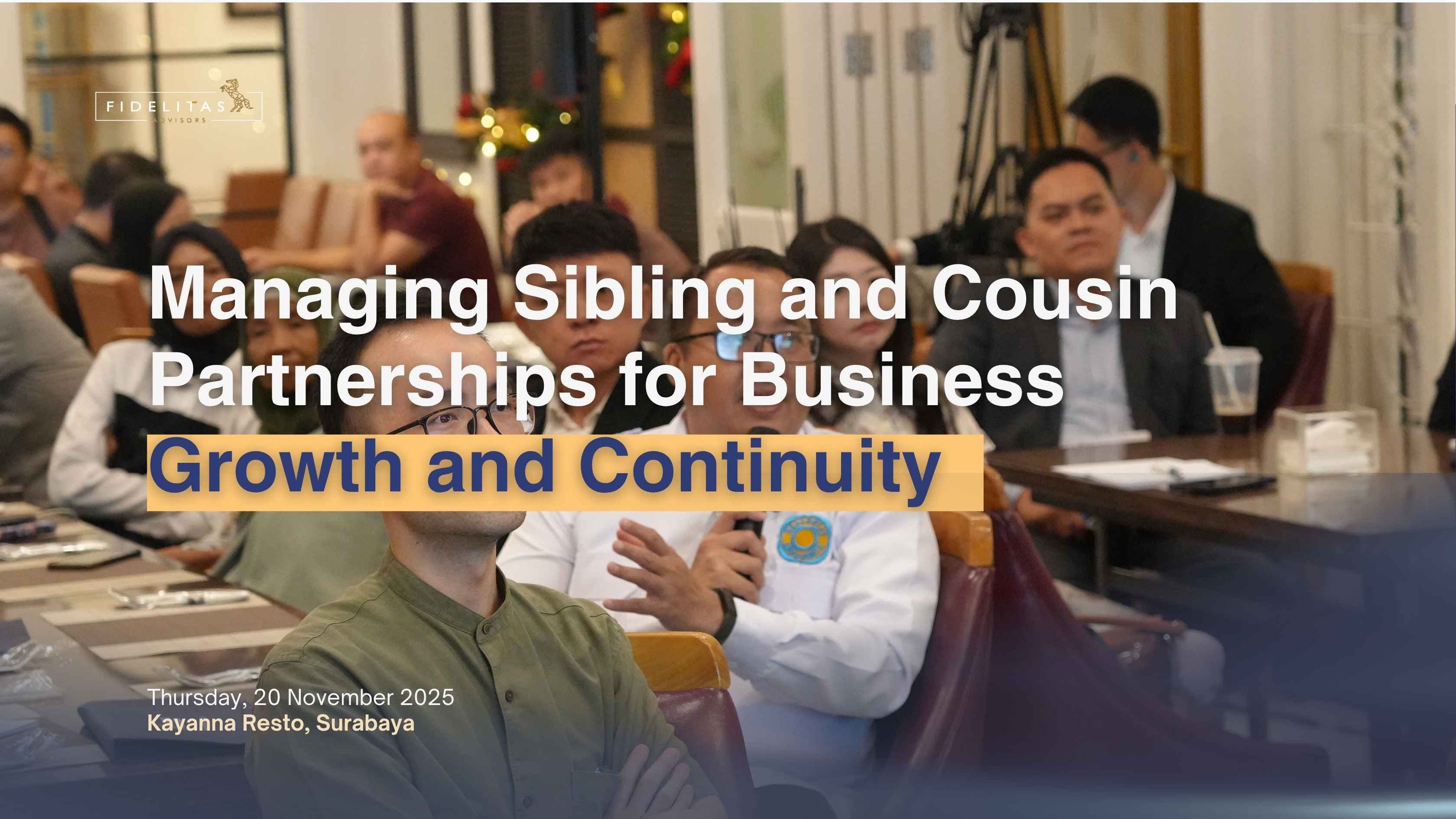
“Does your family know when the transition will take place?”
That question kicked off the Family Business Masterclass: Building a Legacy that Lasts Beyond Generations, organized by Aksoro Business School. The message is simple: generational transition doesn’t happen on its own. Families need to prepare for it long before a leadership change is actually needed.
Family businesses play a major role in the economy. However, only a fraction of them manage to survive into the third and fourth generations. One of the most common challenges is weak governance. When all decisions still depend on the founder, the business may move quickly, but it may not be ready to operate without him or her.
Three Common Scenarios
The workshop highlighted three situations commonly found in family businesses:
- The first scenario involves constantly changing expansion plans. The founder wants to open a new branch immediately, while his children believe the financial conditions and management readiness are not yet sufficient. Because there is no clear forum or decision-making process, employees and business partners lack certainty.
- The second scenario involves hiring family members without consistent standards. Some go through the formal hiring process, while others are placed directly by their parents. This situation raises questions about competence, fairness among family branches, and the credibility of the human resources function.
- The third case occurs when two siblings co-lead the business. The division of roles has been agreed upon verbally, but both still encroach on each other’s areas of responsibility. Instructions come from two directions, decisions are delayed, and business issues begin to affect their personal relationship.
All three cases share a common root cause: the family lacks clarity regarding who makes decisions, who carries them out, and how disagreements are resolved.
When Governance Lags Behind the Business
Governance helps families make decisions through agreed-upon structures and processes, rather than based on closeness, habit, or who is most dominant. Without governance, disagreements over expansion can turn into trust issues. Hiring policies can spark jealousy among family branches. Unclear roles can escalate into a power struggle.
The three main challenges are usually interrelated. Conflicts arise because rights, roles, compensation, and the limits of involvement have not been agreed upon. Succession is delayed because the family is not yet ready to discuss change. Founders find it difficult to reduce their involvement because the organization does not yet have a sufficiently robust system. Ironically, the longer decisions depend on the founder, the fewer opportunities the organization has to build its independence.
Separating Family, Ownership, and Business
To understand this complexity, families need to distinguish between three distinct spheres: family, ownership, and business.
The family sphere addresses values, relationships, harmony, and legacy. The ownership sphere addresses long-term strategy, dividends, capital allocation, and value creation. The business sphere addresses performance, growth, competence, and market position.
Problems arise when these three spheres overlap. Business decisions can be influenced by parent-child relationships. Family issues can be brought into management meetings. Ownership decisions can be made based on short-term emotions. Governance provides the appropriate forum and rules for each type of decision. When overlaps occur, the family has a clear process for addressing them without mixing all interests.
Governance Must Evolve
Governance needs change as the family and ownership evolve.
In the first stage, the business is still managed directly by the founder. Decision-making is centralized, and communication is informal. This model can work as long as the business isn’t too complex.
In the second stage, several siblings begin to share ownership and responsibilities. The family requires a division of roles, communication forums, and more structured decision-making processes.
In the third stage, ownership is spread among cousins. Some work in the company, some are merely shareholders, and some are not directly involved. At this stage, the family requires written policies, more formal forums, and a professional structure.
Therefore, one question that family business owners might collectively reflect on is, “Is the family still using first-generation rules to address the realities of the second or third generation?”
Clarity of Roles Reduces Conflict
One case study in the workshop described a founder who held nearly all major decision-making authority. When he had to take a break due to illness, neither the family nor management knew who was authorized to take over.
This ambiguity arises because family members wear multiple hats. A person might speak as a parent, owner, board member, or boss. A child might respond as a family member, employee, or future owner. When roles are unclear, expectations easily clash. Role clarity helps everyone understand their authority, responsibilities, and the limits of their involvement.

Succession Requires Conscious Choices
Families can utilize various forums depending on the level of complexity.
David Bingei, Principal at Fidelitas Advisors, closed the session with one message: “When roles are clear, the family grows stronger and the business lasts longer.”
Governance does not develop automatically as a business ages. Families need to choose to establish clarity, have conversations that may be uncomfortable, and translate informal practices into a system that can be passed down.
Questions regarding succession, roles, ownership, and conflict resolution are not always easy. However, discussing them early gives the family time to build a shared understanding before circumstances force them to make decisions. Ultimately, a legacy is determined not only by the size of the business built but also by the family’s readiness to manage it together from one generation to the next.