This is a natural question. A Family Constitution is often seen as a solution to clarify the rules of the game, allocate rights and responsibilities, and maintain family harmony.
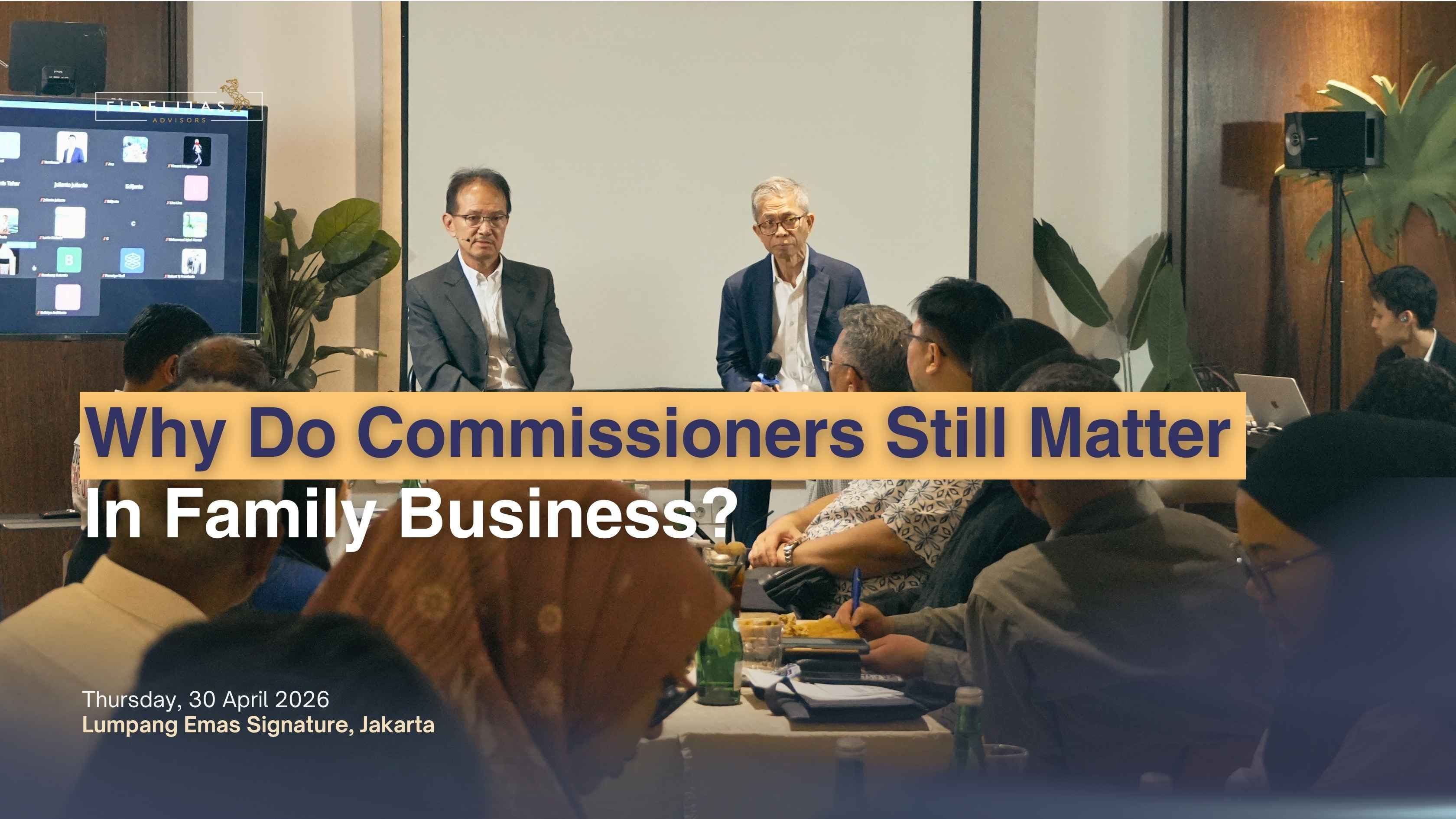
However, during the workshop “Beyond the Family Constitution: Strengthening Family Governance for Sustainable Growth,” organized by Fidelitas Advisors, an important insight emerged: having a Family Constitution does not necessarily mean the family has strong family governance.
A document can provide direction. However, what is more important is when the family shares a common understanding, has forums that function as intended, has a clear division of roles, and follows a consistent decision-making process.
Case Study: Testing the Readiness of Family Governance

At the beginning of the session, Fidelitas presented three cases commonly encountered in business families:
- A Family Constitution that is constantly being revised but has yet to be agreed upon.
- A Family Constitution that is no longer relevant due to changes in the family and the business.
- A Family Constitution drafted solely by the founder without going through a process of dialogue with the family.
These three cases reveal a common pattern: the main challenge is not merely having a document, but ensuring the family is ready to implement it.
Governance That Truly Comes to Life

David Bingei, Principal at Fidelitas Advisors, emphasizes that a Family Constitution is not a legal contract, a corporate policy, or a template that can be copied from another family.
“A Family Constitution succeeds not because it is well written, but because it reflects the family that will live by it.”
A Family Constitution will work if it reflects the values, circumstances, and needs of the family that lives by it. Therefore, the quality of family governance is determined not only by the completeness of the documents but also by the family’s willingness to understand, accept, and implement the agreement.
The question is no longer simply “Do we already have a Family Constitution?”, but “Is our family ready to implement family governance that is vibrant and relevant?”
Family Governance as a Foundation for Harmony
A family may appear harmonious as long as the founder remains the ultimate decision-maker. However, this state of affairs cannot always be maintained once the founder begins to relinquish control. For family businesses aiming to endure across generations, the family must establish ways to maintain harmony that do not rely solely on a single individual.
Healthy harmony does not mean the family always agrees. Harmony is evident in the family’s ability to manage differences without damaging relationships or the direction of the business. Family Governance helps clarify who has the authority to make decisions, which issues need to be discussed together, what information must be shared, and how differences are resolved.
Key Issues at Each Stage of Family Ownership
Governance challenges evolve as ownership structures change. Each stage has different focuses and key issues.
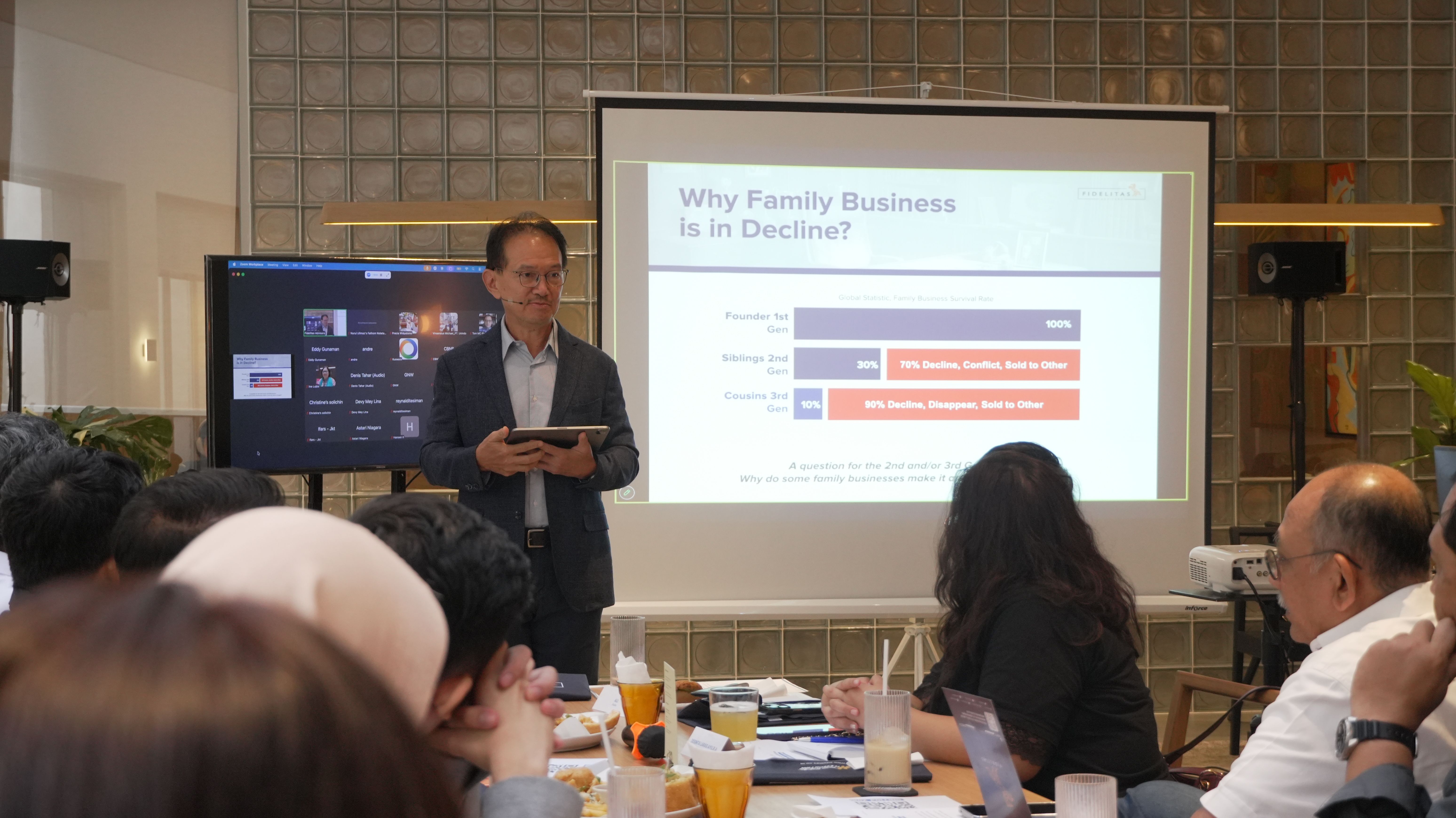
Stage 1: Founder or Controlling Shareholder Control rests with a single family member. The main focus includes leadership transition and succession, estate planning, and the planned transfer of ownership and roles. The family needs to begin determining who will lead the business and how assets and ownership will be passed down.
Stage 2: Sibling Partnership In this stage, ownership is shared among two or more siblings. The main challenges are maintaining cooperation and harmony, aligning interests and roles, preserving family ownership, and agreeing on values, rights, and the direction of succession. The business’s sustainability depends on the siblings’ ability to work together as owners.
Stage 3: Cousin Collaboration At this stage, ownership is increasingly dispersed among family members across several generations. Family Governance must regulate family roles and participation, compensation, family relationships with the business, conflict resolution, shareholder liquidity, and capital allocation policies such as dividends, debt, and profit-sharing.
The more dispersed the ownership, the more important it is to have clear rules regarding family involvement, division of roles, access to information, conflict resolution, and capital and liquidity policies.
Family Governance Evolves as the Family Grows
When a business is still controlled by a single owner, the primary focus is typically on succession and leadership transition. As ownership shifts to several siblings, the challenges evolve to include role clarity, relationships among shareholders, and preparing the next generation. When ownership is spread among cousins, communication, compensation, access to information, and decision-making become increasingly complex.
Therefore, a Family Constitution cannot be treated as a static document. It must evolve alongside the family, ownership, and the business.
Beyond the Family Constitution
Family Governance is not an added layer of bureaucracy. Governance protects relationships, strengthens trust, makes decision-making more consistent, and helps families anticipate conflicts before they escalate into crises.
A Family Constitution remains important, but it is not the ultimate goal. Its value lies in the conversations that shape it, the structures that support it, and the family’s discipline in implementing it. For families that already have a Family Constitution but feel the document isn’t working, the question may not be**, “What’s wrong with this document?”**
The more important question is: “Does this document still reflect our family, and are we truly living by it?”