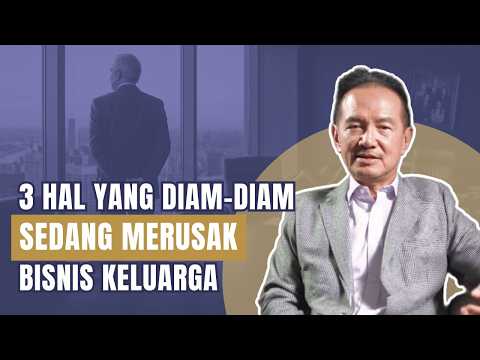
Youtube
Should Every New Business Idea from a Family Member Be Automatically Supported?
One of the dilemmas that often arises in family businesses is how to respond to new business ideas from family members, particularly from the next generation. Rejecting such ideas is often perceived as a lack of trust or support. However, simply approving it without adequate evaluation carries its own risks for both the family and the individual implementing it. The decision to support or not support a business idea is not a matter of affection. It’s a matter of readiness, governance, risk management, and alignment with the family’s overall investment strategy.
Risks That Arise Without an Evaluation Mechanism
When access to family capital feels like a given—meaning every request tends to be approved—there are several things to watch out for. First, there is financial risk to the family. Funds allocated to projects that are not yet ready can significantly erode family assets, especially if failures occur repeatedly without an adequate evaluation process.
Second, the risk of hindering the development of the next generation’s competencies. The pattern of proposing, receiving funding, failing, and then repeating the cycle—without accountability or structured learning—does not help the next generation grow. Without a clear structure, what grows is not entrepreneurship, but dependence.
Investment Governance as a Middle Ground
Based on our advising experience, family businesses that successfully manage these dynamics typically have clear investment governance—not to limit creativity, but to ensure that every idea is tested transparently and can be held accountable.
There are three principles we’ve observed to be effective:
Steering committee or special team. Business ideas aren’t decided directly by the founder’s children. A team independently assesses feasibility—from market and financial aspects to the readiness of the implementation team.
Skin in the game. Some families require the next generation to share a portion of the financial risk associated with proposed investments. This financial involvement—even if proportional—has proven to increase their seriousness and engagement in managing the business.
Full involvement and direct monitoring. One common cause of project failure we’ve observed is the next generation relying too heavily on hired professionals, without actively participating in day-to-day operations. Yet, as a startup, the founder needs to be on the ground—monitoring, making decisions, and adapting to strategic changes.
A Fair Process, Not Rejection
The entrepreneurial spirit within the next generation is an asset that must be nurtured. What needs to be built is not a wall, but a fair and transparent process, where every idea can be evaluated based on the same criteria, free from emotional bias on either side. The question isn’t “Do we support our child?” but rather “Does our family have a clear enough investment process to evaluate these ideas objectively?”